Tracing Promotional Credit Pathways from Roulette Incentives to Live Matchday Wagers
Harper Griffin · Aug 15, 2026

Tracing Promotional Credit Pathways from Roulette Incentives to Live Matchday Wagers
Digital platforms now route promotional credits across game categories with increasing precision, and observers note that bonuses earned through roulette spins often migrate toward live sports markets during peak match periods. Systems track these flows through unique identifiers attached to each credit batch, allowing operators to monitor usage patterns without violating platform rules. Data from industry reports reveal that a substantial portion of roulette-derived credits reaches live matchday wagers within the same session window, particularly when deposit matches or free spin rewards carry flexible wagering requirements.
Mechanics of Credit Allocation Across Categories
Operators assign promotional credits at the point of roulette play through automated triggers tied to bet volume and outcome frequency, after which those credits enter a shared wallet visible across roulette, slots, and sportsbook sections. Players can then apply the same balance to live matchday wagers once the credit type permits cross-category use, a setup documented in platform technical specifications. Studies conducted by university research groups show that this shared-wallet model reduces friction during high-stakes events such as football or tennis matches, where odds shift rapidly and timing matters.
August 2026 saw several major platforms update their credit tagging protocols to distinguish between game-specific bonuses and universal credits, a change that clarified pathways from digital roulette tables to stadium-linked betting markets. Regulatory filings from authorities outside the UK, including those in Australia, indicate that clearer tagging helped reduce instances where credits became stranded in one vertical.
Player Behavior Patterns and Platform Tracking
Analytics dashboards capture how users move credits in real time, and researchers have mapped sequences where roulette winnings convert into pre-match or in-play stakes on live events. One dataset compiled by an academic consortium highlighted that users receiving roulette bonuses during evening hours frequently redirect a measurable share toward matchday wagers once live markets open. These movements occur through single-click transfers within the same application, bypassing separate deposit steps.
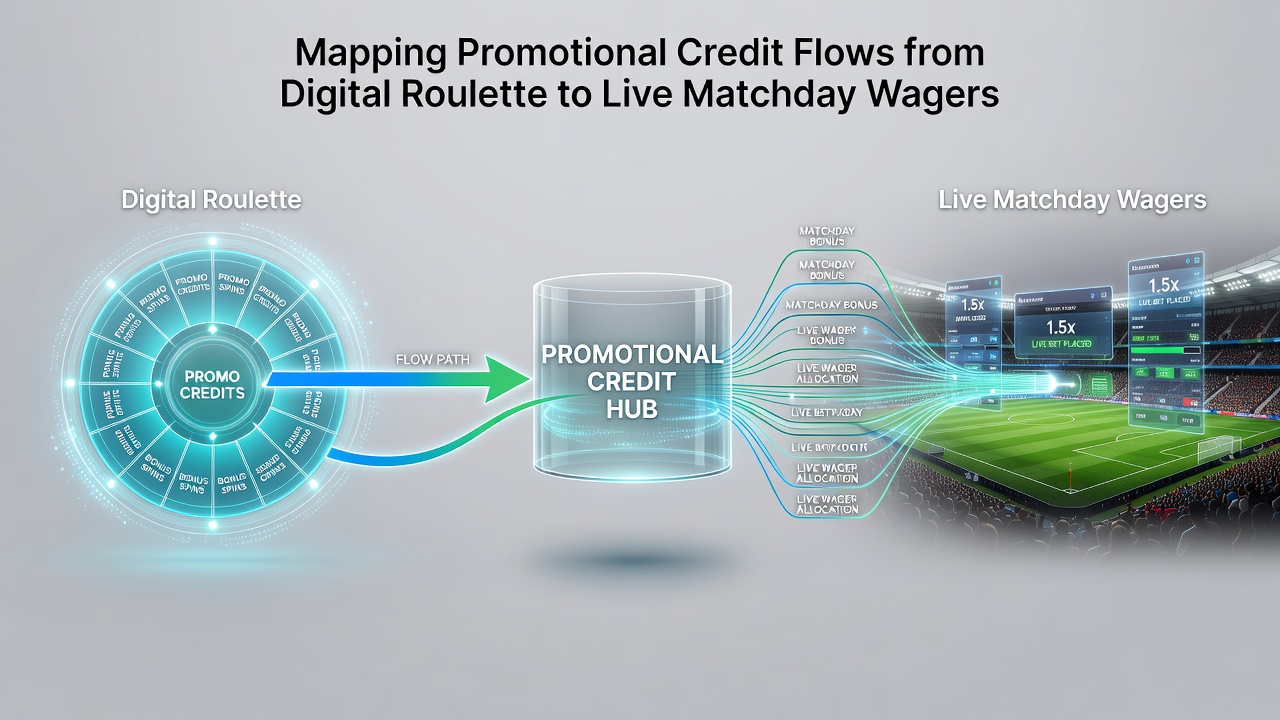
Platform logs also record time stamps that link roulette sessions directly to subsequent sportsbook activity, revealing clusters around major fixtures. Observers note that live matchday wagers attract credits because they offer immediate resolution and variable odds, features that appeal to users already engaged in fast-paced roulette sequences. Figures released by the Canadian Centre for Gaming Research demonstrate similar cross-vertical patterns in jurisdictions where bonus portability remains permitted.
Regulatory and Technical Safeguards
Frameworks established by bodies such as the Nevada Gaming Control Board require operators to maintain audit trails for every credit transfer, ensuring that promotional funds originating in roulette meet the same responsible gaming thresholds when applied to live sports markets. Technical integrations now embed these safeguards directly into the wallet architecture, so credits carry metadata that enforces category-specific rules where needed. Industry associations have published guidelines on these metadata standards, and compliance reports show steady adoption across multiple regions.
External audits verify that credit flows do not circumvent self-exclusion lists or deposit limits, a verification process that relies on real-time reconciliation between game servers and sportsbook engines. Data shared through research partnerships confirm that platforms employing these layered checks experience fewer compliance incidents during periods of elevated matchday traffic.
Conclusion
Mapping promotional credit flows from digital roulette to live matchday wagers requires coordinated tracking systems, clear metadata standards, and cross-referenced behavioral data. Platforms continue to refine these pathways while adhering to jurisdictional requirements, and ongoing research supplies operators with updated metrics on how credits travel between verticals. The resulting infrastructure supports seamless movement for users while maintaining the transparency demanded by regulatory frameworks worldwide.